Designing trust into an AI-generated home value
My Role
- Led quant and qual research end-to-end (self-initiated)
- Built interactive low-code prototype
- Mentored MBA intern on implementation and analysis
- Created design patterns for AI transparency
Problem - AI’s impact on people
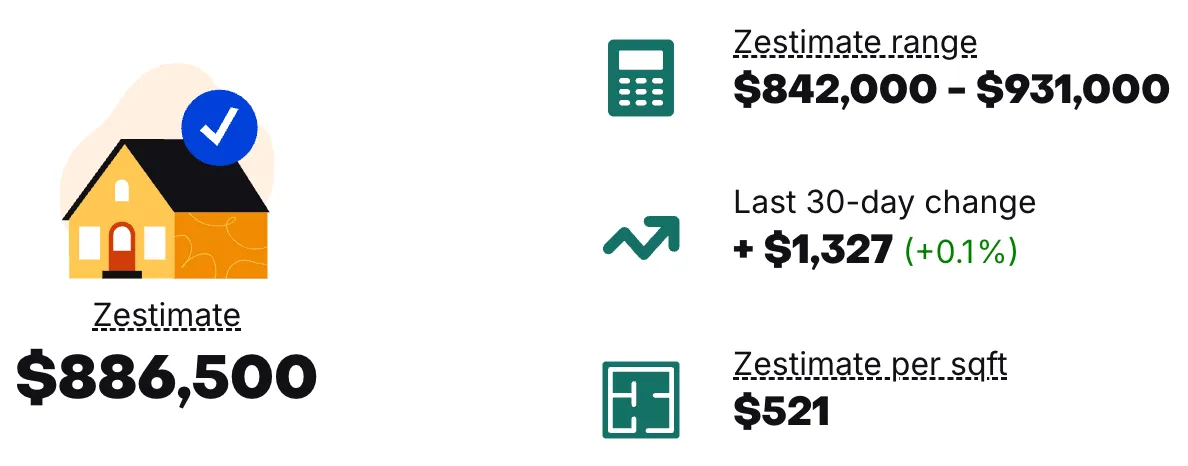
As UX Researcher at Zillow, I was responsible for customer feedback. One recurring signal was impossible to ignore: the Zestimate, Zillow’s AI-generated estimate of a home’s value, was one of the most complained-about parts of the product.
This mattered because Zillow wanted homeowners to come back regularly to track their home value. But if homeowners believed the Zestimate was inaccurate, or worse, personally insulting, why would they trust Zillow as the place to understand their home?
I led a research and prototyping effort to understand the gap between how the Zestimate worked and how homeowners expected it to work. I ran qualitative studies to learn how people estimated their own home value, how they thought the Zestimate was calculated, and why they felt it was wrong. I also designed a quantitative survey using randomly generated hypothetical homes to measure how accurate users expected the Zestimate to be.
Findings
The quant survey showed that homeowners expected the Zestimate to be accurate to roughly the ten-thousands digit, even across very different home prices.
My qual research found that homeowners assumed the Zestimate worked like an appraiser: first starting with comparable homes, then adjusting up or down based on meaningful differences like remodels, finishes, and home features.
But in reality, the Zestimate could not always account for the individual features homeowners cared most about, and Zillow did not clearly show the comparable homes or model inputs behind the number.
Prototyping and testing
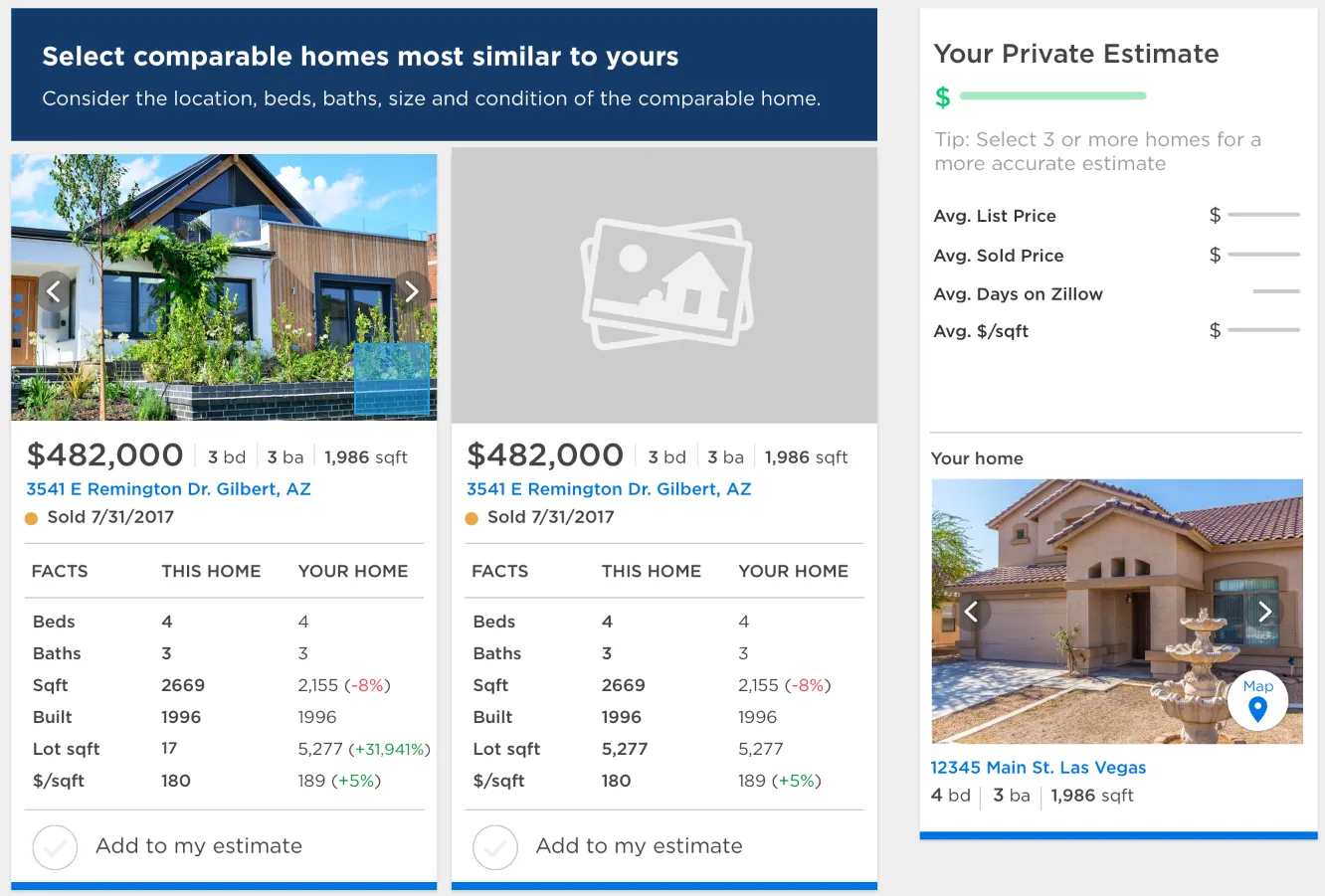
Based on this work, I proposed and tested two product directions. First, I created an interactive low-code prototype for a comparative market analysis tool that let homeowners pick their own comps and self-calculate a home value. If their estimate matched the Zestimate, it built trust in the Zestimate; if it differed, Zillow still helped them understand their home’s value. Second, I worked with designers to redesign how the Zestimate was explained, including showing the submodels and comparable homes that contributed to the estimate.
Design patterns
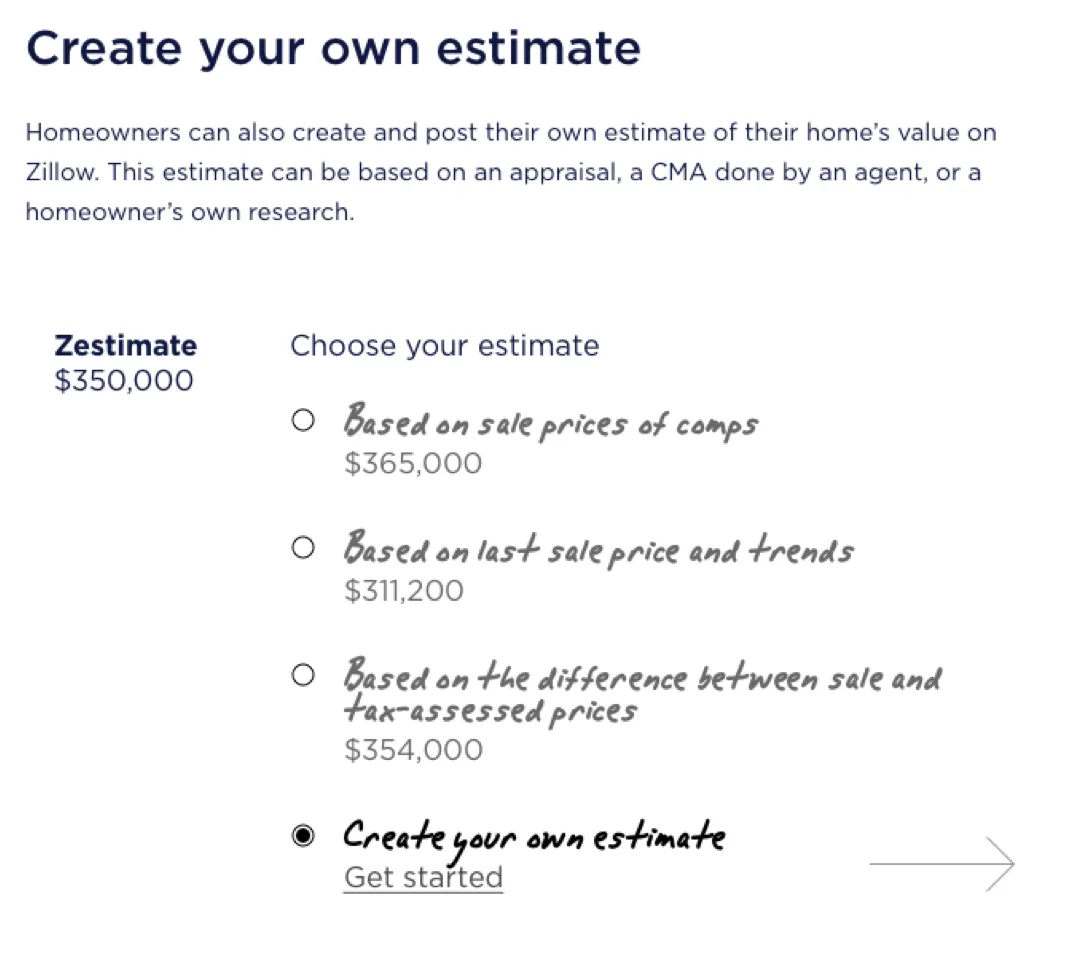
I also created a set of patterns and heuristics for presenting AI-derived insights at Zillow, including: explain how a number was calculated, provide examples that reinforce users’ mental models, let users drill down into the raw data, and provide recourse when the AI is wrong.
Impact
The result was a shift from “make the AI estimate seem right” to “help homeowners reason about value.” The work increased trust in Zillow and the Zestimate, reduced complaints, and created reusable guidance for designing transparent AI-backed data products.